Showing posts with label credit. Show all posts

Friday, February 3, 2017

U.S. judge temporarily blocks Trump's travel ban

A U.S. judge has imposed a nationwide hold on Donald Trump's ban on travellers and immigrants from seven majority-Muslim countries, siding with two states that had challenged the executive order that has launched legal battles across the country.
In Seattle, U.S. District Judge James Robart ruled that Washington state and Minnesota had standing to challenge Trump's order, which government lawyers disputed, and said they showed their case was likely to succeed.
About 60,000 people from the affected countries had their visas cancelled.
"The state has met its burden in demonstrating immediate and irreparable injury," Robart said. "This TRO [temporary restraining order] is granted on a nationwide basis ..."
It wasn't immediately clear what happens next for people who had waited years to receive visas to come to the U.S., however an internal email circulated among Homeland Security officials told employees to comply with the ruling immediately. 
U.S. Customs and Border Protection officials have also informed U.S. airlines that they can once again board travellers who had been barred by the executive order. Canada's WestJet was told the same thing.

White House responds

White House spokesperson Sean Spicer released a statement late Friday saying they "will file an emergency stay of this outrageous order and defend the executive order of the president, which we believe is lawful and appropriate."
Soon after, the White House sent out a new statement that removed the word "outrageous."
"The president's order is intended to protect the homeland and he has the constitutional authority and responsibility to protect the American people," the statement said.
Trump's order last week sparked global protests and confusion at U.S. airports as some travellers were detained. The White House has argued that it will make the country safer.
Washington became the first state to sue over the order that temporarily bans travel for people from Iran, Iraq, Syria, Sudan, Somalia, Libya and Yemen and suspends the U.S. refugee program.
State Attorney General Bob Ferguson said the travel ban significantly harms residents and effectively mandates discrimination. Minnesota joined the lawsuit two days later.

'The law is a powerful thing'

After the ruling, Ferguson said people from the affected countries can now apply for entry to the U.S.
"Judge Robart's decision, effective immediately … puts a halt to President Trump's unconstitutional and unlawful executive order," Ferguson said. "The law is a powerful thing — it has the ability to hold everybody accountable to it, and that includes the president of the United States."
Gillian M. Christensen, a spokesperson for the Department of Homeland Security, said the agency doesn't comment on pending litigation. The judge's ruling could be appealed the 9th U.S. Circuit Court of Appeals.
The judge's written order, released late Friday, said it's not the court's job to "create policy or judge the wisdom of any particular policy promoted by the other two branches" of government.
The court's job "is limited to ensuring that the actions taken by the other two branches comport with our country's laws."
Robart ordered federal defendants "and their respective officers, agents, servants, employees, attorneys and persons acting in concert or participation with them are hereby enjoined and restrained from" enforcing the executive order.
Federal attorneys had argued that Congress gave the president authority to make decisions on national security and immigrant entry.
The two states won a temporary restraining order while the court considers the lawsuit, which aims to permanently block Trump's order. Court challenges have been filed nationwide from states and advocacy groups.
In court, Washington Solicitor General Noah Purcell said the focus of the state's legal challenge was the way Trump's order targeted Islam.
Trump has called for a ban on Muslims entering the country, and the travel ban was an effort to make good on that campaign promise, Purcell told the judge.
"Do you see a distinction between campaign statements and the executive order?" Robart asked. "I think it's a bit of a reach to say the president is anti-Muslim based on what he said in New Hampshire in June."
Purcell said there was an "overwhelming amount of evidence" to show that the order was directed at the Muslim religion, which is unconstitutional.

No attacks from 7 banned countries

When the judge questioned the federal government's lawyer, Michelle Bennett, he repeatedly questioned the rationale behind the order.
Robart, who was appointed the federal bench by President George W. Bush, asked if there had been any terrorist attacks by people from the seven counties listed in Trump's order since 9/11. Bennett said she didn't know.
"The answer is none," Robart said. "You're here arguing we have to protect from these individuals from these countries, and there's no support for that."
Bennett argued that the states can't sue on behalf of citizens and the states have failed to show the order is causing irreparable harm.
Robart disagreed.
Up to 60,000 foreigners from the seven majority-Muslim countries had their visas cancelled because of the executive order, the State Department said Friday.
That figure contradicts a statement from a Justice Department lawyer on the same day during a court hearing in Virginia about the ban. The lawyer in that case said about 100,000 visas had been revoked.
The State Department clarified that the higher figure includes diplomatic and other visas that were actually exempted from the travel ban, as well as expired visas.
Ferguson, a Democrat, said the order is harming Washington residents, businesses and its education system.
Washington-based businesses Amazon, Expedia and Microsoft support the state's efforts to stop the order. They say it's hurting their operations, too.

Saturday, January 28, 2017

Mark Zuckerberg Says He’s Not Running For President

Mark Zuckerberg has no plans to run for president, the Facebook founder and CEO told BuzzFeed News Tuesday.
"No," Zuckerberg wrote in response to a question about his intent to run. "I'm focused on building our community at Facebook and working on the Chan Zuckerberg Initiative," referring to the limited-liability corporation he and his wife, Priscilla Chan, founded in 2015 to advance human potential and promoting equality through major bets in education and science research. Zuckerberg did not immediately respond to follow-up questions about whether he'd explicitly ruled out a run.
Zuckerberg's response comes after weeks of speculation from the tech press and beyond, set off by a series of events that indicated a run might be in the cards, including a pledge to visit the approximately 30 US states he hadn't yet been to. "Will Mark Zuckerberg Be Our Next President?" Vanity Fair asked in January.

"There's absolutely no truth to the idea that Mark is running for office and I've heard it directly from him," the source told BuzzFeed News. "Here's the thing: For Mark, Facebook is global community that already plays this huge part in the lives of billions of people around the world and plays an incredibly important role in shaping the base on the issues that matter."
Zuckerberg is preparing for a political battle, the source was careful to emphasize, but as a private citizen focused on the goals he has already outlined through the Chan Zuckerberg Initiative. "There is absolutely a possibility that Mark may choose to play a stronger role in the political system and political debates," the source said. Zuckerberg has been "very transparent" in his advocacy for "greater equality and optimizing research that find cures for disease and solves the fundamental problems of our time, but I really don't see him stepping away from Facebook."
Last week, Zuckerberg announced that he had poached Uber executive David Plouffe, a former campaign manager for Barack Obama, as CZI's president of policy and advocacy. He also tapped Ken Mehlman, George W. Bush's former campaign manager, in an advisory role. "You can make change, but in order for it to be sustainable, you need to build a movement to support it," Zuckerberg told The New York Times.
Calling for a movement, backed by bipartisan political operatives, sounds awfully presidential, but Zuckerberg used the same language when he first launched CZI in December, 2015.
The stock restructuring deal ties back to CZI as well. The changes were made after Zuckerberg and Chan donated 99 percent of their Facebook shares, then worth roughly $45 billion, to CZI. In order retain control while he gave away equity, Zuckerberg introduced a new class of stock and revised rules, including a concession that "serving in a government position or office," for two years would not constitute a voluntary resignation.
Success in business doesn't necessarily guarantee success at the polls. . "First thing is these people should not be running for office," Bradley Tusk, an Uber advisor and investor, who also managed Michael Bloomberg's 2009 mayoral campaign, told BuzzFeed Newsduring a conversation about the increasingly political role played by Silicon Valley leaders. "It worked for Mike [Bloomberg] because of 9/11. If you look at the history of rich people from business or tech running for office, they almost always lose. That personality type is very different from running a company. The reality is if you're Mark, with your wealth and platform," you're better off as CEO of Facebook than President, he said.
Tusk also pointed out that direct political engagement has not been as successful for Zuckerberg in the past. "Look at Fwd.us. How much money did those guys get taken for? And they accomplished nothing," he said, referring to Zuckerberg's ill-conceived immigration advocacy group. "They are better off using their strengths and their skills," than jumping directly into the political arena, Tusk said.

Wednesday, January 25, 2017

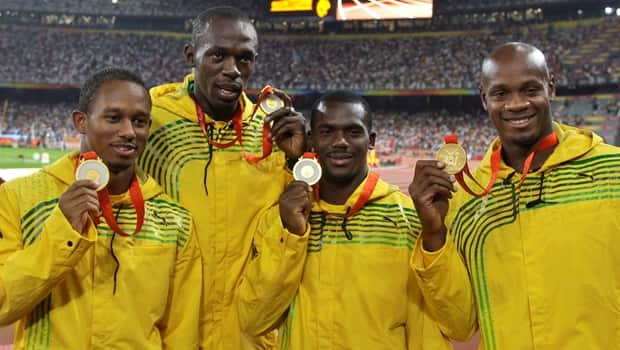
Usain Bolt loses 2008 Olympic relay gold after Nesta Carter's positive test

Usain Bolt has lost one of his nine Olympic gold medals in a doping case involving teammate Nesta Carter.
The IOC said Wednesday that Carter tested positive for methylhexaneamine, a banned stimulant, in re-analysis of samples from the 2008 Beijing Olympics.
Olympic rules state that the entire relay team can be disqualified and stripped of medals if one runner fails a doping test.
Carter and Bolt were teammates on the winning 4x100-metre team, which set a world record of 37.10 seconds. Carter ran the opening leg, and Bolt took the baton third in a team that also included Michael Frater and Asafa Powell.
"The Jamaican team is disqualified," the IOC said in a statement. "The corresponding medals, medallist pins and diplomas are withdrawn and shall be returned."
The relay title in Beijing completed the first of Bolt's gold medal sweeps in the 100, 200 and relay at three straight Olympics.

'This changes everything' 

The Canadian team of Pierre Browne, Anson Henry, Jared Connaughton, Hank Palmer — who finished sixth in the race — will now move into the top five.
"I hear I'm a fifth-place finisher now at the Olympics now," Henry, now a CBC Sports reporter, said on CBC News Network on Wednesday. "A couple of more positive [doping] tests and then I'll have a medal around my neck."
"But seriously, this changes everything", Henry continued. "[Carter] had a really good start in that race. We were right outside of Jamaica. He snuck up on Palmer really quickly. That changes [our] race. It changes our exchange. That changes my leg. Not to mention the rest of the teams."
According to Henry, the disqualification will cause a great deal of pain to the other sprinters. 
"Think about some of the things that are taken away from these [other] athletes," he said. "You see Richard Thompson with Trinidad and Tobago [crossing the finish line] in second place. Yeah, his team got a silver medal. But what better [way] than to cross the line [in first] for your country with your flag across your chest, arms raised, standing on the top of the podium? There were some other people that suffered because of this."
Media placeholder
CBC Sports' Anson Henry discusses downfall of Jamaican relay team6:15
Bolt set world record times for all three sprint titles at the Bird's Nest, establishing himself as the defining superstar of Olympic track.

Possible IAAF ban

Bolt and Carter will retain their gold medals from Jamaica's relay win at the 2012 London Olympics — in a record time of 36.84 seconds that stands today. Bolt ran the final leg on that team. He took the baton from Yohan Blake, who served a ban in 2009 for ingesting the same substance as Carter.
Carter and Bolt also helped lower their relay world record between the Olympic titles, taking gold at the 2011 world championships in Daegu, South Korea, in 37.04.
The 31-year-old Carter has teamed with Bolt on three straight world championship relay-winning teams, from 2011 through 2015. He also took an individual bronze in the 100 in 2013 in Moscow, behind Bolt and Justin Gatlin of the United States.
Carter, who did not compete at the Rio de Janeiro Olympics, faces a ban from the IAAF.
Trinidad and Tobago is in line to get the gold medal from 2008, Japan could be upgraded to silver, and fourth-place finisher Brazil could get the bronze medal.
Carter testified by video conference to an IOC disciplinary hearing held in Lausanne on Oct. 17.
The IOC's ruling states that Carter noted he was taking supplements in 2008 "advised in this respect by his coach, Mr. Stephen Francis."
"The athlete explained that he had given several samples for doping controls whilst he was taking Cell Tech and Nitro Tech before the 2008 Olympic Games and he had never tested positive for a prohibited substance," the detailed verdict stated.
"He therefore did not believe that these supplements could contain prohibited substances. He did not understand how methylhexaneamine could have been found in 2016."
Though methylhexaneamine was not specifically named on the 2008 list of prohibited substances, it "fell within the scope of the general prohibition of stimulants having a similar chemical structure or similar biological effect as the listed stimulants," the judging panel of three IOC members wrote.

Separate ruling 

The panel doubted if the supplements identified had caused the positive test given that Carter "used such supplements regularly and that this did not lead to other problems."
The runner cast doubt on his own ability to avoid doping rule violations. In a written statement to the IOC, "[Carter] asserted that he did not remember having received any formal anti-doping training in his career."
Carter can appeal the sanction to the Court of Arbitration for Sport. However, the IOC panel already anticipated one challenge in its written verdict.
"The Court of Arbitration for Sport ["CAS"] has confirmed that the presence or use of substances falling within the scope of generic definitions of the prohibited list, can be used as a basis of establishing anti-doping rules violations," the verdict said.
In a separate ruling Wednesday, another former Olympic champion was stripped of two silver medals from the Beijing Games.
The IOC said Russian athlete Tatiana Lebedeva tested positive for the anabolic steroid turinabol in re-tests, and would be disqualified from her runner-up placings in the long jump and triple jump.
Lebedeva won long jump gold at the 2004 Athens Olympics and also previously won Olympic silver and bronze in triple jump.

Sunday, January 22, 2017

Defeated Gambian leader Yahya Jammeh made off with government money, luxury cars

Exiled Gambian ruler Yahya Jammeh stole millions of dollars in his final weeks in power, plundering the state coffers and shipping out luxury vehicles by cargo plane, a special adviser for the new president said Sunday.
Meanwhile, a regional military force rolled in, greeted by cheers, to secure this tiny West African nation so that democratically elected President Adama Barrow could return home. He remained in neighbouring Senegal, where he took the oath of office Thursday because of concerns for his safety.
At a press conference in the Senegalese capital, Barrow's special adviser Mai Ahmad Fatty told journalists that the president "will return home as soon as possible.
Underscoring the challenges facing the new administration, Fatty confirmed that Jammeh made off with more than $11.4 million US during a two-week period alone. That is only what they have discovered so far since Jammeh and his family took an offer of exile after more than 22 years in power and departed late Saturday.
GAMBIA-POLITICS/
People celebrate the arrival of the regional ECOWAS force in Banjul, Gambia, on Sunday. The soldiers are clearing the way for newly elected President Adama Barrow to arrive. (Afolabi Sotunde/Reuters)

'Gambia is in financial distress'

"The Gambia is in financial distress. The coffers are virtually empty. That is a state of fact," Fatty said. "It has been confirmed by technicians in the ministry of finance and the Central Bank of the Gambia."
Fatty also confirmed that a Chadian cargo plane had transported luxury goods out of the country on Jammeh's behalf in his final hours in power, including an unknown number of vehicles.
'The coffers are virtually empty. That is a state of fact.'- Mai Ahmad Fatty, presidential adviser 
Fatty said officials at the Gambia airport have been ordered not to allow any of Jammeh's belongings to leave. Separately, it appeared that some of his goods remained in Guinea, where Jammeh and his closest allies stopped on their flight into exile.
Fatty said officials "regret the situation," but it appeared that the major damage had been done, leaving the new government with little recourse to recoup the funds.

Exiled in Equatorial Guinea

The unpredictable Jammeh, known for startling declarations like his claim that bananas and herbal rubs could cure AIDS, went into exile under mounting international pressure, with a wave to supporters as soldiers wept. He is now in Equatorial Guinea, home to Africa's longest-serving ruler and not a state party to the International Criminal Court.
Jammeh's dramatic about-face on his December election loss to Barrow, at first conceding and then challenging the vote, appeared to be the final straw for the international community, which had been alarmed by his moves in recent years to declare an Islamic republic and leave the Commonwealth and the ICC.
GAMBIA-POLITICS/EXILE
A security officer of former Gambian president Yahya Jammeh cries as he arrives at the airport before flying into exile from Gambia on Saturday. The new administration says he left government coffers empty when he took off. (Thierry Gouegnon/Reuters)
Barrow's adviser disavowed a joint declaration issued after Jammeh's departure by the United Nations, African Union and the Economic Community Of West African States (ECOWAS) that bestowed a number of protections upon Jammeh, his family and his associates — including the assurance that their lawful assets would not be seized.
"As far as we're concerned, it doesn't exist," Fatty said.
The declaration also said Jammeh's exile was "temporary" and that he reserved the right to return to Gambia at the time of his choosing.
Although the declaration was written to provide Jammeh with maximum protection, it doesn't give him amnesty, according to international human rights lawyer Reed Brody.
"Under international law in fact you can't amnesty certain crimes like torture and massive or systematic political killings," he said in an email. "Depending where Jammeh ends up, though, the real obstacles to holding him accountable will be political."

Clearing the way for Barrow

Barrow will now begin forming a cabinet and working with Gambia's national assembly to reverse the state of emergency Jammeh declared in his final days in power, said Halifa Sallah, spokesman for the coalition backing the new leader.
The president's official residence, State House, needs to be cleared of any possible hazards before Barrow arrives, Sallah added.
GAMBIA-POLITICS/
Members of the regional ECOWAS force are seen at the Denton Bridge check point in Banjul. Gambia's defence chief said he welcomes the West African soldiers 'wholeheartedly.' (Thierry Gouegnon/Reuters)
The regional military force that had been poised to force out Jammeh if diplomatic efforts failed rolled into Gambia's capital, Banjul, on Sunday night to secure it for Barrow's arrival.
Hundreds greeted the force's approach to State House, cheering and dancing, while some people grabbed soldiers to take selfies.

Truth and reconciliation 

With Jammeh gone, a country that had waited in silence during the crisis sprang back to life. Shops and restaurants opened, music played and people danced in the streets.
GAMBIA-DAILYLIFE/
A woman selling tomatoes laughs in a market at Serekunda, Gambia, on Sunday. Since the exile of defeated leader Yahya Jammeh, people are returning to the country.
Defence chief Ousmane Badjie said the military welcomed the arrival of the regional force "wholeheartedly." With proper orders, he said, he would open the doors to the notorious prisons where rights groups say many who have disappeared over the years may be kept.
"We are going to show Barrow we are really armed forces with a difference, I swear to God," Badjie said. "I have the Qu'ran with me."
Some of the 45,000 people who had fled the tiny country during the crisis began to return. The nation of 1.9 million, which promotes itself to overseas tourists as "the Smiling Coast of Africa," has been a major source of migrants heading toward Europe because of the situation at home.
GAMBIA-POLITICS/Barrow, who has promised to reverse many of Jammeh's actions, told The Associated Press on Saturday he will launch a truth and reconciliation commission to investigate alleged human rights abuses of Jammeh's regime. Rights groups say those include arbitrary detentions, torture and even killing of opponents.
"After 22 years of fear, Gambians now have a unique opportunity to become a model for human rights in West Africa," Amnesty International's deputy director for West and Central Africa, Steve Cockburn, said in a statement Sunday.

Trump overstates inauguration crowd as Women's March appears to draw bigger turnout

There were strong signs across the U.S. that the number of people who attended the Women's March on Washington on Saturday topped those who gathered on Friday to watch U.S. President Donald Trump's inauguration. 
But as over a million people around the world protested in solidarity with events in Washington, both the president and his press secretary took aim Saturday at the media for "attempts to lessen the enthusiasm of the inauguration" and claimed a bigger turnout than the available data suggests. 
The U.S. capital's metro subway stations and train cars were full in many locations on Saturday, while ridership on Friday was well off the numbers from Obama's first inaugural.
Interim D.C. Police Chief Peter Newsham said on Independence Avenue, "The crowd stretches so far that there's no room left to march."
Metro tweeted Sunday that 1,001,616 trips were taken on the rail system the day of the Women's March on Washington. Metro spokesman Dan Stessel had said that on Friday, the day of Trump's inauguration, just over 570,000 trips were taken on the rail system.
No official estimates of the crowd size at the march were immediately available, but the demonstrators appeared to easily exceed the 200,000 organizers had initially expected.
Kevin Donahue, Washington's deputy mayor for public safety and justice, said on Twitter that organizers of the march increased the turnout estimate to over half a million.
On Sunday, Trump and his staff continued their attacks on the media, with adviser Kellyanne Conway saying it was unfair for the media to compare the crowds to President Barack Obama's 2009 inauguration.
ikes
"Photographs of the inaugural proceedings were intentionally framed in a way, in one particular tweet, to minimize the enormous support that had gathered on the National Mall," Spicer's statement readTrump's press secretary said, without evidence, in a statement released Saturday, that the media intentionally framed pictures and video to make the event look smaller.
"These attempts to lessen the enthusiasm of the inauguration are shameful and wrong."
Trump said the inauguration crowd looked to be about 1.5 million people. The National Park Service doesn't provide an official estimate, but such a figure is highly dubious. Other events that filled more of the Mall have not drawn a crowd of that size.
Spicer also stated: "This was the largest audience to ever witness an inauguration — period — both in person and around the globe."
It is not known how many people watched the ceremony on television around the globe, but in the U.S., Nielsen estimates 31 million viewers watched TV coverage.
The 2009 inauguration of Obama, who became the nation's first black president that year, was watched by nearly 38 million viewers, the second-highest number since Nielsen began compiling such figures with Richard Nixon's 1969 oath of office.
Only Reagan drew a bigger U.S. TV inauguration audience, with nearly 42 million viewers tuning in to see the California Republican sworn in for his first term in 1981. 
Trump's total was greater than both swearings-in of Democrat Bill Clinton — 29.7 million and 21.6 million — and the second inauguration of Obama, who drew an average audience of over 20.5 million in 2013, Nielsen said.

Over 1 million protested Trump worldwide

In a global exclamation of defiance and solidarity on Saturday, more than a million people had rallied at women's marches in the Washington, D.C., and cities around the world. The more than 600 "sister marches" around the world were held in conjunction with the main Women's March on Washington.
Many of the women came wearing pink, pointy-eared "pussyhats" to mock the new president. Plenty of men joined in, too, contributing to surprising numbers everywhere from New York, Philadelphia, Chicago and Los Angeles, to Mexico City, Paris, Berlin, London, Prague and Sydney.

Friday, January 20, 2017

Mexican drug lord 'El Chapo' faces life sentence in U.S. prison

Mexican drug kingpin Joaquin "El Chapo" Guzman will spend the rest of his life in a U.S. prison if convicted on charges he ran the world's largest drug-trafficking organization during a decades-long criminal career, U.S. prosecutors said on Friday.
El Chapo (Shorty), once one of the world's most wanted drug lords, was set to appear at 2 p.m. ET in federal court in Brooklyn, N.Y., to be arraigned on 17 criminal counts, a day after his surprise extradition from Mexico.
The charges carry a mandatory minimum sentence of life in prison, Robert Capers, U.S. attorney for the Eastern District of New York, said at a news conference.
"Who is Chapo Guzman? In short, he's a man known for no other life but a life of crime, violence, death and destruction, and now he'll have to answer to that," Capers said.
Guzman, 59, arrived in a small jet at Long Island's MacArthur Airport after nightfall on Thursday from a prison in the city of Juarez in the northern state of Chihuahua, where his Sinaloa cartel rules.
A few hours earlier, he was bundled out of the Mexican cell block with his hands cuffed above his bowed head, Mexican television footage showed.
Guzman is charged in six separate U.S. indictments. He is accused of money laundering and drug trafficking, kidnapping and murder in Chicago, Ill., Miami, Fla., New York and other cities.

More than 40 witnesses

Federal prosecutors in Brooklyn, N.Y., have more than 40 witnesses ready to testify against Guzman, Capers told reporters, adding that the trial will likely last "many" weeks.
U.S. prosecutors gave assurances to Mexican officials that they would not seek the death penalty in order to secure his extradition, Capers said. Mexico opposes capital punishment.
One of Guzman's lawyers was surprised at the extradition, saying that four appeals in Mexico were outstanding to stop it.
U.S. authorities did not have much notice, either, although they had long planned for Guzman's arrival, Justice Department official Kenneth Blanco said at the news conference. "We were notified yesterday that he would be on his way," he said.
Leading the Sinaloa cartel, Guzman oversaw perhaps the world's largest transnational cocaine, heroin and methamphetamine smuggling operation, playing a key role in Mexico's decade-long drug war that has killed over 100,000 people.
"Guzman and the Sinaloa cartel had a veritable army, ready to war with competitors and anyone Guzman deemed to be a traitor," U.S. prosecutors said. He was known to carry a gold-plated AK-47 rifle.

$14 billion in drug proceeds and profits

The indictment of Guzman seeks to recover more than $14 billion in drug proceeds and illicit profits.
"We can't say how much we have eyes on or how much we'll recover but what we do know is that the government will be vigilant in trying to recover as much of those assets as we can," Capers said.
The extradition came on the eve of Donald Trump's inauguration, a coincidence that some officials said was an olive branch to the incoming president who declared he would kick Guzman's "ass" on taking office.
The Mexican attorney general's office rejected claims the move was related to Trump's swearing-in, noting that Guzman faces 10 pending cases in Mexico following his U.S. sentence.
He was captured a year ago after he had fled a high-security penitentiary in central Mexico through a mile-long tunnel, his second dramatic prison escape.
U.S. authorities, citing security concerns, declined to say where he would be held while awaiting trial, but they vowed to prevent any further escapes.
"I assure you, no tunnel will be built leading to his bathroom," Special Agent In Charge Angel Melendez of U.S. Homeland Security Investigations said at the news conference.
Melendez said he was present when Guzman deplaned in Long Island.
"As you looked into his eyes you could see the surprise, you could see the shock, and to a certain extent you could actually see the fear as the realization started to kick in that he's about to face American justice," he said. 

Wednesday, January 18, 2017

YouTube is testing in-app messaging to take on Facebook

Google-owned video platform is currently testing a new in-app messaging feature on iOS and Android that will allow users to exchange clips, texts and links without ever having to leave the app. 
But there’s one catch: The functionality is solely available in Canada for the time being. Google product manager Shimrit Ben Yair told Canada’s Financial Post the decision to run trials on Canadian soil has to do with the fact that it’s the country that shares videos more than anyone else in the world.
The messaging platform is pretty straightforward and has no specific video-centric features. Still, the move towards in-app messaging could have much larger implications for the future of YouTube.
A few months back, Google toyed around with the idea of giving certain channels the option to send direct messages to their audience. It also briefly tested with in-app messaging last year in May.
The move was likely aimed at encouraging creators and fans to interact more on YouTube itself, rather than resorting to other platforms like Facebook, Twitter and Reddit.
While it’s unclear whether Google has any plans to roll out the feature to all users in the future, the experiment is a strong indication that the company hasn’t quite given up on turning YouTube into more of a social network.
In case you want to sneak a peek at YouTube’s new messaging feature, get one of your Canadian friends to add you to a conversation – that should give you an early preview.

Tuesday, January 17, 2017

Tesla Motors To Share More Gigafactory Details At Trade Show In March

Earlier this month, Tesla Motors Inc (NASDAQ:TSLA) held an investor event at the Gigafactory, which included a factory tour as well as a recently-released handout on the battery cell manufacturing. Yet, most of the analysts have been unsatisfied with the details the automaker has provided up till now.
Electrek reported that Tesla will spill some more beans about what will be the world’s largest factory building at its completion. Both Tesla Senior Director of Cell Supply Chain & Business Development, Kurt Kelty, and the famous battery research partner, Jeff Dahn, will give a presentation at the annual International Battery Seminar & Exhibition, which will be held in Fort Lauderdale, FL between March 20 and March 23.
Mr. Kelty, one of the top battery scientists at Tesla, will give a keynote presentation on “Gigafactory Material Sourcing and Cell Production” at the exhibition on March 22, according to its brochure. Moreover, the cell production for Tesla Energy products, Powerwall and Powerpack built at the Gigafactory, will be discussed.
Soon after, Mr. Dahn will present at the seminar on the same day. The researcher has been studying on battery cell’s voltage, which can be increased to generate better durability and higher energy density of lithium-ion batteries. This would be essential for Tesla to bring down costs of its vehicles and energy storage products.
While his work focuses on nickel manganese cobalt oxide (NMC) lithium-ion cells, which is used by Tesla for its battery cell chemistry. Mr. Dahn’s keynote will be on “Surprising Chemistry in Li-Ion Cells,” discussing ways to counter harmful reactions in battery cells to increase their capacity.

Monday, January 16, 2017

Yukon home to 1st traces of humans in North America 24,000 years ago, research suggests

Humans may have been living in Yukon's Bluefish Caves 10,000 years earlier than previously thought, new research from the University of Montreal suggests.
If confirmed, this would make it the oldest known archeological site in North America, representing the earliest evidence found so far of humans in North America.
New carbon aging tests were done on bones first discovered in the caves south of Old Crow, Yukon, in the 1970s.
The Bluefish Caves in Yukon lie in a region known as Beringia, a dry landmass now mostly underwater. It stretched between Yukon and Alaska, over the Bering Sea to Russia nearly 24,000 years ago during the last ice age. 
The testing suggests that's when the human beings lived near the caves. 
"We have lots of lines of evidence that are converging on what looks like quite a coherent story of what looks like human presence," said Ariane Burke, an anthropologist at the University of Montreal.
Twenty-three fragments studied by Lauriane Bourgeon "definitely" show signs of being cut by human tools, Burke said. The bones likely belong to animals butchered by the people living in the caves.
"You look at the shape the tool makes when it cuts into the bone," she said. "A stone tool will typically leave a 'V' shaped mark and that is straight with streaks on the walls of the cut mark."
Most early presence sites are dated to 14,000 years ago, the time most archeologists think humans first came to North America. It's an accepted theory because those sites have tools or charcoal present. 
When the caves were first studied in the 1970s and 80s, the suggestion that humans had occupied the caves so much earlier was controversial in the scientific community as some questioned the integrity of the site and whether the animal bones found had actually been modified by humans. 
 
Since tools or charcoal have not yet been found at the Bluefish Caves site, some archeologists may still not accept these new findings, said Greg Hare, an archeologist with the Yukon government.  
"There are still going to be a lot of archeologists who look at it with raised eyebrows," he said. 
"Is it the final chapter? I don't think so. But it's good, solid work and I'm excited they've been able to revisit it and come up with those dates."

Study supports standstill theory

Aside from determining the age of the bones, the research examines the standstill theory.
That theory argues a group of humans from Central Asia were isolated in Beringia during the last ice age, 24,000 years ago. Burke says their isolation caused their DNA to become unique, and that type of DNA can be traced in humans today. 
Burke says there was also pollen discovered in the caves, and it was dated to be from 24,000 years ago.

Sunday, January 15, 2017

2 richest Canadians have wealth equal to 11 million poorest

The two richest Canadians have the same amount of wealth as the poorest 30 per cent of the country combined, according to a new report from a group of international aid organizations.
The Oxfam report says the wealth of billionaire businessmen David Thomson and Galen Weston Sr. equals that of about 11 million Canadians.
The group of organizations, under the banner group Oxfam International, published its report "An Economy for the 99%" ahead of the World Economic Forum in Davos, Switzerland, which begins Tuesday.
The report also said that the world's eight richest people have as much wealth as the poorest 50 per cent of the world's population.
"This is not a report about the rich and the poor. It's about the super-rich and the rest of us," said Lauren Ravon, the director of policy and campaigns at Oxfam Canada. 
Oxfam made its calculations about global wealth distribution based on the Credit Suisse Global Wealth Data book, and calculated the wealth of the world's richest people using the annual billionaires list from Forbes Magazine, which was last published in March 2016.

The difference between wealth and income 

Jim Davies, a professor at the University of Western Ontario who works on the Credit Suisse report, said there can be broader implications of wealth inequality. He noted that those implications are often different from those of income inequality.
Wealth is calculated by subtracting a person's debts from their assets, he said, whereas income refers to the money or assets a person makes or receives over a period of time.
Wealth offers security, Davies said, which income doesn't always do.
"If you lose your job, you're in a much worse position if you don't have money in the bank," he noted.
Ravon said the effects of wealth inequality can ricochet into other parts of society.
"In countries that are more unequal, there's higher rates of crime. Those societies are less healthy. People distrust each other more," she said. "People feel like they're disconnected from society when they see that the super-rich are writing the rules in their favour."

Having the government's ear  

And Stephen Harris, a professor of public policy at Carleton University and the University of Ottawa, said wealthy business owners have more power to lobby the government than the majority of everyday Canadians, which contributes to inequality.
"We used to really be a caring-sharing society," he said. "We lost some of that."
A society with so much inequality isn't economically sustainable, Ravon added. "In the long-term, if there's such concentration of wealth in the hands of just a few, there will be no one left to buy the goods, to keep the economy running."
But Harris said the problem isn't so easily fixed.
"I guess if I had a solution I'd be rich," he said. "But I don't have a bullet that would fix it."

Calls for wealth redistribution 

He said there are some things Canada can do to address the problem — such as policies for wealth redistribution used in Nordic countries, which tend to have less inequality — but they won't work unless the population gets behind the changes.
"We can't just migrate a system to this country," he said. "People have to be supportive of it if it's going to have legitimacy."
Oxfam's report made a number of suggestions for the government to implement in its next federal budget, including progressive taxation — a system used in Nordic countries, where those with higher incomes pay a greater portion of that income in taxes.
It also suggested raising the proportion of government spending on public services and social protection.
For the government's part, an official in the office of Social Development Minister Jean-Yves Duclos said in a statement that Trudeau's Liberals have already started making changes to grow the middle class.
Mathieu Filion wrote in an email that one of the first things the government did after coming to power was to cut taxes to the middle class and raise them for families with an income of $250,000 or more.
He also noted the government introduced the Canada Child Benefit, which he said gives an average of $2,300 to 90 per cent of families.
He said the government is watching the issue of wealth inequality "closely."

Sunday, January 1, 2017

Why It’s Time for Apple to Come Clean About the iPhone Battery

It happened again last week. The battery display on my iPhone 6 plunged from around 50% to below 10%, and then the phone shut down entirely. All of a sudden, I found myself cut off from Google Maps (GOOGL, -1.30%) in an unfamiliar part of town, and with no way to text my friends for directions.
This has happened before, and it's a real nuisance. The iPhone pulled the same stunt during a recent road race, cutting off my pace-keeping app and my music, and it's happened right when I've needed to make an important phone call.
But the most annoying aspect of all this is that Apple (AAPL, -0.78%)refuses to come clean about what's going on. While the company is running a limited battery replacement program for some iPhone 6s models, it's still pretending things are just fine with other models.
"A small number of customers outside of the affected range have also reported an unexpected shutdown," an Apple spokesperson wrote as part of an emailed statement to Fortune. (The full response is available below.)
A small number? I don't believe it. In a very informal poll of work colleagues, at least five of them reported iPhone battery issues similar to what I had experienced. Meanwhile, other publications are also calling attention to the problem Apple dare not name.

"Many iPhone 6 and iPhone 6s owners are complaining about a bug that essentially shuts down the phone even when it has a lot of battery life left. This is a problem that is happening right now, and yet, Apple hasn't figured out the true cause or at minimum hasn't disclosed it to the public."
And while the official corporate line at Apple is that things are fine, store employees seem to know better. When I brought my device into the Apple Store at the Oculus-World Trade Center location in Lower Manhattan, a worker there acknowledged she had heard of similar complaints, and offered a solution: Apple could reinstall the firmware on the device, which would fix the battery problem, but would also cause me to lose important data, including all my text messages.
No, thanks. What I would like instead is for Apple to swallow its pride and explain to its customers that there's something amiss with the iPhone and that a real fix is on the way.
Yes, this would be a blow to Apple. The iPhone is its flagship product and is a symbol of Apple's commitment to perfection and engineering excellence — admitting that product is defective would hurt both its reputation and its mystique.
But allowing the problem to fester while blowing off a rising chorus of customer complaints is not befitting of Apple either. Sure, the iPhones aren't literally blowing up in customers' hands (à la Samsung) but the battery problem is surely at a point where Apple needs to take action.
Here is the Apple spokesperson's full response to what is going on with the batteries:
We work hard to offer our customers the best product, experience, and customer support. We believe this is why we have earned the highest customer satisfaction rating of any smartphone maker in China and around the world.
We take every customer concern very seriously, including the limited number of reports of unexpected shutdown with iPhones. We also want to thank the agencies for forwarding concerns to us and their engagement with us. Every time we encounter an issue, we investigate using a thorough process including analyzing these devices. We also look at diagnostic information from the broader set of customers who have opted in to our standard diagnostic data reporting. When we find something, we work to quickly provide our customers with a solution.
As a result of our investigation on this, we found that a small number of iPhone 6s devices made in September and October 2015 contained a battery component that was exposed to controlled ambient air longer than it should have been before being assembled into battery packs. Two weeks ago, we launched a worldwide program to replace affected batteries, free of charge. We again apologize for any customer inconvenience. It's important to note, this is not a safety issue.
A small number of customers outside of the affected range have also reported an unexpected shutdown. Some of these shutdowns can occur under normal conditions in order for the iPhone to protect its electronics. In an effort to gather more information, we are including additional diagnostic capability in an iOS software update which will be available next week. This will allow us to gather information over the coming weeks which may potentially help us improve the algorithms used to manage battery performance and shutdown. If such improvements can be made, they will be delivered in future software updates.
Tim Cook, the ball is in your court: a new year is approaching, and 2017 would be a great time for Apple to restore the iPhone's once-impeccable reputation.