Showing posts with label Hybrids. Show all posts

Friday, February 3, 2017

U.S. judge temporarily blocks Trump's travel ban

A U.S. judge has imposed a nationwide hold on Donald Trump's ban on travellers and immigrants from seven majority-Muslim countries, siding with two states that had challenged the executive order that has launched legal battles across the country.
In Seattle, U.S. District Judge James Robart ruled that Washington state and Minnesota had standing to challenge Trump's order, which government lawyers disputed, and said they showed their case was likely to succeed.
About 60,000 people from the affected countries had their visas cancelled.
"The state has met its burden in demonstrating immediate and irreparable injury," Robart said. "This TRO [temporary restraining order] is granted on a nationwide basis ..."
It wasn't immediately clear what happens next for people who had waited years to receive visas to come to the U.S., however an internal email circulated among Homeland Security officials told employees to comply with the ruling immediately. 
U.S. Customs and Border Protection officials have also informed U.S. airlines that they can once again board travellers who had been barred by the executive order. Canada's WestJet was told the same thing.

White House responds

White House spokesperson Sean Spicer released a statement late Friday saying they "will file an emergency stay of this outrageous order and defend the executive order of the president, which we believe is lawful and appropriate."
Soon after, the White House sent out a new statement that removed the word "outrageous."
"The president's order is intended to protect the homeland and he has the constitutional authority and responsibility to protect the American people," the statement said.
Trump's order last week sparked global protests and confusion at U.S. airports as some travellers were detained. The White House has argued that it will make the country safer.
Washington became the first state to sue over the order that temporarily bans travel for people from Iran, Iraq, Syria, Sudan, Somalia, Libya and Yemen and suspends the U.S. refugee program.
State Attorney General Bob Ferguson said the travel ban significantly harms residents and effectively mandates discrimination. Minnesota joined the lawsuit two days later.

'The law is a powerful thing'

After the ruling, Ferguson said people from the affected countries can now apply for entry to the U.S.
"Judge Robart's decision, effective immediately … puts a halt to President Trump's unconstitutional and unlawful executive order," Ferguson said. "The law is a powerful thing — it has the ability to hold everybody accountable to it, and that includes the president of the United States."
Gillian M. Christensen, a spokesperson for the Department of Homeland Security, said the agency doesn't comment on pending litigation. The judge's ruling could be appealed the 9th U.S. Circuit Court of Appeals.
The judge's written order, released late Friday, said it's not the court's job to "create policy or judge the wisdom of any particular policy promoted by the other two branches" of government.
The court's job "is limited to ensuring that the actions taken by the other two branches comport with our country's laws."
Robart ordered federal defendants "and their respective officers, agents, servants, employees, attorneys and persons acting in concert or participation with them are hereby enjoined and restrained from" enforcing the executive order.
Federal attorneys had argued that Congress gave the president authority to make decisions on national security and immigrant entry.
The two states won a temporary restraining order while the court considers the lawsuit, which aims to permanently block Trump's order. Court challenges have been filed nationwide from states and advocacy groups.
In court, Washington Solicitor General Noah Purcell said the focus of the state's legal challenge was the way Trump's order targeted Islam.
Trump has called for a ban on Muslims entering the country, and the travel ban was an effort to make good on that campaign promise, Purcell told the judge.
"Do you see a distinction between campaign statements and the executive order?" Robart asked. "I think it's a bit of a reach to say the president is anti-Muslim based on what he said in New Hampshire in June."
Purcell said there was an "overwhelming amount of evidence" to show that the order was directed at the Muslim religion, which is unconstitutional.

No attacks from 7 banned countries

When the judge questioned the federal government's lawyer, Michelle Bennett, he repeatedly questioned the rationale behind the order.
Robart, who was appointed the federal bench by President George W. Bush, asked if there had been any terrorist attacks by people from the seven counties listed in Trump's order since 9/11. Bennett said she didn't know.
"The answer is none," Robart said. "You're here arguing we have to protect from these individuals from these countries, and there's no support for that."
Bennett argued that the states can't sue on behalf of citizens and the states have failed to show the order is causing irreparable harm.
Robart disagreed.
Up to 60,000 foreigners from the seven majority-Muslim countries had their visas cancelled because of the executive order, the State Department said Friday.
That figure contradicts a statement from a Justice Department lawyer on the same day during a court hearing in Virginia about the ban. The lawyer in that case said about 100,000 visas had been revoked.
The State Department clarified that the higher figure includes diplomatic and other visas that were actually exempted from the travel ban, as well as expired visas.
Ferguson, a Democrat, said the order is harming Washington residents, businesses and its education system.
Washington-based businesses Amazon, Expedia and Microsoft support the state's efforts to stop the order. They say it's hurting their operations, too.

Saturday, January 28, 2017

Mark Zuckerberg Says He’s Not Running For President

Mark Zuckerberg has no plans to run for president, the Facebook founder and CEO told BuzzFeed News Tuesday.
"No," Zuckerberg wrote in response to a question about his intent to run. "I'm focused on building our community at Facebook and working on the Chan Zuckerberg Initiative," referring to the limited-liability corporation he and his wife, Priscilla Chan, founded in 2015 to advance human potential and promoting equality through major bets in education and science research. Zuckerberg did not immediately respond to follow-up questions about whether he'd explicitly ruled out a run.
Zuckerberg's response comes after weeks of speculation from the tech press and beyond, set off by a series of events that indicated a run might be in the cards, including a pledge to visit the approximately 30 US states he hadn't yet been to. "Will Mark Zuckerberg Be Our Next President?" Vanity Fair asked in January.

"There's absolutely no truth to the idea that Mark is running for office and I've heard it directly from him," the source told BuzzFeed News. "Here's the thing: For Mark, Facebook is global community that already plays this huge part in the lives of billions of people around the world and plays an incredibly important role in shaping the base on the issues that matter."
Zuckerberg is preparing for a political battle, the source was careful to emphasize, but as a private citizen focused on the goals he has already outlined through the Chan Zuckerberg Initiative. "There is absolutely a possibility that Mark may choose to play a stronger role in the political system and political debates," the source said. Zuckerberg has been "very transparent" in his advocacy for "greater equality and optimizing research that find cures for disease and solves the fundamental problems of our time, but I really don't see him stepping away from Facebook."
Last week, Zuckerberg announced that he had poached Uber executive David Plouffe, a former campaign manager for Barack Obama, as CZI's president of policy and advocacy. He also tapped Ken Mehlman, George W. Bush's former campaign manager, in an advisory role. "You can make change, but in order for it to be sustainable, you need to build a movement to support it," Zuckerberg told The New York Times.
Calling for a movement, backed by bipartisan political operatives, sounds awfully presidential, but Zuckerberg used the same language when he first launched CZI in December, 2015.
The stock restructuring deal ties back to CZI as well. The changes were made after Zuckerberg and Chan donated 99 percent of their Facebook shares, then worth roughly $45 billion, to CZI. In order retain control while he gave away equity, Zuckerberg introduced a new class of stock and revised rules, including a concession that "serving in a government position or office," for two years would not constitute a voluntary resignation.
Success in business doesn't necessarily guarantee success at the polls. . "First thing is these people should not be running for office," Bradley Tusk, an Uber advisor and investor, who also managed Michael Bloomberg's 2009 mayoral campaign, told BuzzFeed Newsduring a conversation about the increasingly political role played by Silicon Valley leaders. "It worked for Mike [Bloomberg] because of 9/11. If you look at the history of rich people from business or tech running for office, they almost always lose. That personality type is very different from running a company. The reality is if you're Mark, with your wealth and platform," you're better off as CEO of Facebook than President, he said.
Tusk also pointed out that direct political engagement has not been as successful for Zuckerberg in the past. "Look at Fwd.us. How much money did those guys get taken for? And they accomplished nothing," he said, referring to Zuckerberg's ill-conceived immigration advocacy group. "They are better off using their strengths and their skills," than jumping directly into the political arena, Tusk said.

Wednesday, January 25, 2017

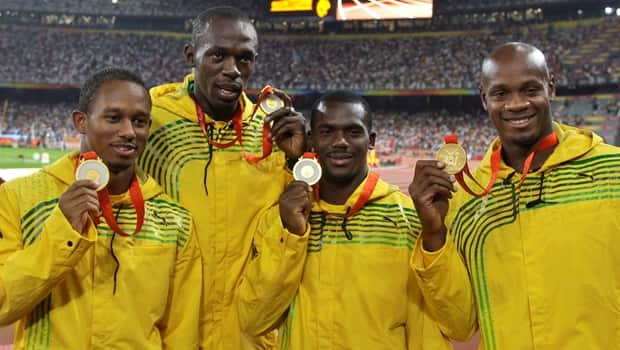
Usain Bolt loses 2008 Olympic relay gold after Nesta Carter's positive test

Usain Bolt has lost one of his nine Olympic gold medals in a doping case involving teammate Nesta Carter.
The IOC said Wednesday that Carter tested positive for methylhexaneamine, a banned stimulant, in re-analysis of samples from the 2008 Beijing Olympics.
Olympic rules state that the entire relay team can be disqualified and stripped of medals if one runner fails a doping test.
Carter and Bolt were teammates on the winning 4x100-metre team, which set a world record of 37.10 seconds. Carter ran the opening leg, and Bolt took the baton third in a team that also included Michael Frater and Asafa Powell.
"The Jamaican team is disqualified," the IOC said in a statement. "The corresponding medals, medallist pins and diplomas are withdrawn and shall be returned."
The relay title in Beijing completed the first of Bolt's gold medal sweeps in the 100, 200 and relay at three straight Olympics.

'This changes everything' 

The Canadian team of Pierre Browne, Anson Henry, Jared Connaughton, Hank Palmer — who finished sixth in the race — will now move into the top five.
"I hear I'm a fifth-place finisher now at the Olympics now," Henry, now a CBC Sports reporter, said on CBC News Network on Wednesday. "A couple of more positive [doping] tests and then I'll have a medal around my neck."
"But seriously, this changes everything", Henry continued. "[Carter] had a really good start in that race. We were right outside of Jamaica. He snuck up on Palmer really quickly. That changes [our] race. It changes our exchange. That changes my leg. Not to mention the rest of the teams."
According to Henry, the disqualification will cause a great deal of pain to the other sprinters. 
"Think about some of the things that are taken away from these [other] athletes," he said. "You see Richard Thompson with Trinidad and Tobago [crossing the finish line] in second place. Yeah, his team got a silver medal. But what better [way] than to cross the line [in first] for your country with your flag across your chest, arms raised, standing on the top of the podium? There were some other people that suffered because of this."
Media placeholder
CBC Sports' Anson Henry discusses downfall of Jamaican relay team6:15
Bolt set world record times for all three sprint titles at the Bird's Nest, establishing himself as the defining superstar of Olympic track.

Possible IAAF ban

Bolt and Carter will retain their gold medals from Jamaica's relay win at the 2012 London Olympics — in a record time of 36.84 seconds that stands today. Bolt ran the final leg on that team. He took the baton from Yohan Blake, who served a ban in 2009 for ingesting the same substance as Carter.
Carter and Bolt also helped lower their relay world record between the Olympic titles, taking gold at the 2011 world championships in Daegu, South Korea, in 37.04.
The 31-year-old Carter has teamed with Bolt on three straight world championship relay-winning teams, from 2011 through 2015. He also took an individual bronze in the 100 in 2013 in Moscow, behind Bolt and Justin Gatlin of the United States.
Carter, who did not compete at the Rio de Janeiro Olympics, faces a ban from the IAAF.
Trinidad and Tobago is in line to get the gold medal from 2008, Japan could be upgraded to silver, and fourth-place finisher Brazil could get the bronze medal.
Carter testified by video conference to an IOC disciplinary hearing held in Lausanne on Oct. 17.
The IOC's ruling states that Carter noted he was taking supplements in 2008 "advised in this respect by his coach, Mr. Stephen Francis."
"The athlete explained that he had given several samples for doping controls whilst he was taking Cell Tech and Nitro Tech before the 2008 Olympic Games and he had never tested positive for a prohibited substance," the detailed verdict stated.
"He therefore did not believe that these supplements could contain prohibited substances. He did not understand how methylhexaneamine could have been found in 2016."
Though methylhexaneamine was not specifically named on the 2008 list of prohibited substances, it "fell within the scope of the general prohibition of stimulants having a similar chemical structure or similar biological effect as the listed stimulants," the judging panel of three IOC members wrote.

Separate ruling 

The panel doubted if the supplements identified had caused the positive test given that Carter "used such supplements regularly and that this did not lead to other problems."
The runner cast doubt on his own ability to avoid doping rule violations. In a written statement to the IOC, "[Carter] asserted that he did not remember having received any formal anti-doping training in his career."
Carter can appeal the sanction to the Court of Arbitration for Sport. However, the IOC panel already anticipated one challenge in its written verdict.
"The Court of Arbitration for Sport ["CAS"] has confirmed that the presence or use of substances falling within the scope of generic definitions of the prohibited list, can be used as a basis of establishing anti-doping rules violations," the verdict said.
In a separate ruling Wednesday, another former Olympic champion was stripped of two silver medals from the Beijing Games.
The IOC said Russian athlete Tatiana Lebedeva tested positive for the anabolic steroid turinabol in re-tests, and would be disqualified from her runner-up placings in the long jump and triple jump.
Lebedeva won long jump gold at the 2004 Athens Olympics and also previously won Olympic silver and bronze in triple jump.

Tuesday, January 17, 2017

Tesla Motors To Share More Gigafactory Details At Trade Show In March

Earlier this month, Tesla Motors Inc (NASDAQ:TSLA) held an investor event at the Gigafactory, which included a factory tour as well as a recently-released handout on the battery cell manufacturing. Yet, most of the analysts have been unsatisfied with the details the automaker has provided up till now.
Electrek reported that Tesla will spill some more beans about what will be the world’s largest factory building at its completion. Both Tesla Senior Director of Cell Supply Chain & Business Development, Kurt Kelty, and the famous battery research partner, Jeff Dahn, will give a presentation at the annual International Battery Seminar & Exhibition, which will be held in Fort Lauderdale, FL between March 20 and March 23.
Mr. Kelty, one of the top battery scientists at Tesla, will give a keynote presentation on “Gigafactory Material Sourcing and Cell Production” at the exhibition on March 22, according to its brochure. Moreover, the cell production for Tesla Energy products, Powerwall and Powerpack built at the Gigafactory, will be discussed.
Soon after, Mr. Dahn will present at the seminar on the same day. The researcher has been studying on battery cell’s voltage, which can be increased to generate better durability and higher energy density of lithium-ion batteries. This would be essential for Tesla to bring down costs of its vehicles and energy storage products.
While his work focuses on nickel manganese cobalt oxide (NMC) lithium-ion cells, which is used by Tesla for its battery cell chemistry. Mr. Dahn’s keynote will be on “Surprising Chemistry in Li-Ion Cells,” discussing ways to counter harmful reactions in battery cells to increase their capacity.

Friday, December 30, 2016

Massive New iPhone 'Confirmed' In Apple Leak

New iPhones have no secrets. That much has been true ever since the iPhone grew so popular it became impossible to contain the all leaks from its massive global supply chain. And now a new one is promising the biggest news of the next generation really is size...
Backing up several consistent leaks is yet another today from DigiTimes which ‘confirms’ Apple will indeed supersize the iPhone in 2017.
“Apple will launch 4.7-, 5.5- and 5.8-inch new iPhone models in second-half 2017, with TFT-LCD panels to be used in the former two models and AMOLED for the 5.8-inch one...Global shipments of the AMOLED iPhone in 2017 are estimated at 60-70 million units,” the publication notes, citing its source.

It also claims Samsung will be the exclusive manufacturer of OLED panels used in the enlarged iPhone, supplying up to 20 million panels a month.
First things first, for a company which famously mocked larger phone sizes jumping to a 5.8-inch panel is somewhat surprising. Especially given rivals like Google, Samsung and LG have all downsized from 5.7 to 6-inch panels in their premium smartphones to standardise on 5.5 inches in recent years and Apple has done little to try and optimise the user experience in iOS to take advantage of the larger screen size of the iPhone Plus range compared to the standard model.
That said, I suspect the 5.8-inch measurement may include the edges considering the “all curve” display this new larger model is expected to have. 

This could then make it a similar size to the dual curved 5.5-inch Galaxy S7 Edge and short lived Galaxy Note 7 which measure 5.5-inches but don’t count the curves in their measurements. Or at least let’s hope so given Apple persists with keeping the back button in the top left corner of the user interface.

Secondly 60-70M units is a lot for a single model and would prove a record busting year should the other 2017 4.7-inch and 5.5-inch models also sell in numbers anywhere close to recent years. This would be a huge reversal in fortunes for Apple which has seen iPhone sales decline consistently in recent years and will build expectation that this premium (and higher priced) ‘iPhone 8’ (as it is being called) will be something to get hearts pounding as the line celebrates its 10th anniversary.
Of course with Apple typically only finalising iPhone designs six months before their September release a lot could still change. But after three generations of incremental design tweaks, expectations that 2017 will see the range reinvigorated are likely to hit new heights.

T-Mobile touts its network size, strength headed into 2017

T-Mobile is ending the year the way it started it: pumping up its own network and not-to-subtly throwing shade on the others. Under all the bluster, there are a few things to take away. 
For all the 5G hype going on — from mobile networks and manufacturers alike — we're still a long way off from any kind of significant 5G roll-out. T-Mobile accepts this, but is committing itself to being ready for 5G so that it can roll it out faster and better than the competition. 
As far as current network technology goes, T-Mobile is still the only network with the technology to reach 1Gbps on its current LTE, though it did do it on an "un-released handset." It's a promising test, but it remains to be seen just how well this gigabit LTE will hold up, especially once it's more than one test unit connecting to it. 
One more note worth mentioning refers to T-Mobile now covering 313 million people (not to be confused with actually serving that many people), just barely being edged out by Verizon. You might not think a single million separating them is much, but once you translate that million into the rural areas they live in, that 1 million turns into a few good chunks on a map. Chunks not a lot of people live in, but important nonetheless.

Monday, December 26, 2016

The group trying to take down North Korea with USB sticks

A human rights organization is trying to influence people living in one of the most closed societies in the world, with nothing more than USB sticks.Earlier this year, the Human Rights Foundation launched "Flash Drives for Freedom" with the goal of changing the totalitarian system of North Korea to a more free and open society, by delivering information and education, instead of relying on diplomacy or military action.Roughly 10,000 drives loaded with "subversive" content will be delivered to the country by the end of this year."Truth is an incredibly dangerous weapon," Alex Gladstein, Chief Strategy Officer for the Human Rights Foundation.

Tuesday, December 9, 2014

Dutch Trains use Lazers

Dutch trains are awaiting to be connected with an on-board laser to zap possible obstacles on the rails. So far, only testing is underway and the use of these lasers are only possible for trains travelling at speeds of 50 km and under. Obstacles on the track can interfere with the trains brakes and anti- collision brakes. Finally, I can travel on time across the country.

Wednesday, October 1, 2014

Your old iPhone would make an amazing, musical lamp

It's October, which means there's a good chance you have a spare last-gen iPhone laying around and aren't quite sure what to do with it. You could sell it, of course, but if you feel like hanging on to it for sentimental purposes, you could always use it as a fancy ultra-modern musical lamp. With an at-home 3D printer and the help of Kwambio, you can do just that.
Kwambio is a new web platform on which designers can sell their designs to anyone with a capable 3D printer. It just launched, and while the number of people who have a 3D printer at home is just starting to ramp up, one designer on the service has created a simple iPhone accessory that lots of people are going to love.
In short, it's an elegant, simple arm that holds your iPhone. While in its nook, the phone can used as a lamp by turning on the flashlight feature, and since the bottom of the iPhone remains exposed, it can remain plugged into a charging cable and can even pump out some Spotify or iTunes music over Wi-Fi. According to Kwambio, the lamp -- which was designed by Ivan Zhurba -- can fit the iPhone 4/4s and 5/5c, and a version for the new iPhone 6 is already on the works.
It's probably one of the best ways to repurpose an old iPhone I've ever seen. Now I just need to invest in a 3D printer to make it a reality.
 
Mike Wehner
TUAW- October 1st, 2014  

Tuesday, September 16, 2014

B.C. teachers' strike: When will schools reopen?

A tentative deal has been reached in an effort to end the B.C. teachers' strike, but a lot remains to be done before schools can reopen.
Both sides need to finalize the details of the tentative pact, which is expected to happen sometime on Tuesday.
Then the province's 41,000 public school teachers will have to vote on the proposed contract.
A date for a ratification vote has not yet been announced, but B.C. Teachers' Federation spokeswoman Nancy Knickerbocker tweeted that teachers could vote on the tentative deal on Thursday.
David Komlenjovic, president of the Kamloops/Thompson Teachers' Association and a member of the provincial bargaining committee says he expects classes to resume next week.
"The executive still has to ratify it provincially, recommend it to the membership, and once the membership has ratified it, students could be back in school by Monday."
Lots of work to be done
Vancouver School Board trustee Mike Lombardi says school administrators have been doing what they can to prepare for a swift return to classes, but it will take time.
He says there may be specific details regarding the back-to-school protocol in the tentative deal — if that's the case, they would dictate how soon classes can begin.
Administrators need to assign teachers to classes, and then those teachers will need time to prepare for students.
School counsellors also need to draw up new schedules for students, in particular those who were unable to make up classes at summer school.
"In our secondary schools, the administrator is not the one who does the timetable. The timetable is specifically done by the counsellors, and so the counsellors are part of the union. So we're going to have to wait until we see exactly what kids' courses look like."
Lombardi says there may be difficulty working out missed summer school courses for some students.
In addition, administrators say schools, which have behind picket lines for three months, need to be cleaned.
It all suggests students could be back in school likely Monday next week.
Some schools have professional development days scheduled for Monday and it remains unclear what will happen in those cases.

Monday, September 15, 2014

Apple says sees record demand for new iPhones

Apple on Monday said it had received record pre-orders for its new iPhone models, and that some customers will have to wait for the larger-screen versions of the smartphones.
The California tech giant said more than four million pre-orders were received in the 24 hours after the new devices went on sale last Friday.
"Demand for the new iPhones exceeds the initial pre-order supply and while a significant amount will be delivered to customers beginning on Friday and throughout September, many iPhone pre-orders are scheduled to be delivered in October," Apple said in a statement.
Apple last week unveiled the iPhone 6 and iPhone 6 Plus, in a move aimed at satisfying consumer preference for bigger smartphone displays.
The announcement means Apple may see shortages and long lines at its retail stores when sales begin on Friday.
"Pre-orders for iPhone 6 and iPhone 6 Plus set a new record for Apple, and we can't wait to get our best iPhones yet into the hands of customers starting this Friday,” Apple chief executive Tim Cook said in the statement.
Sales are set to open at 8 am local time in the US, Australia, Canada, France, Germany, Hong Kong, Japan, Puerto Rico, Singapore and Britain. Some 20 more countries will get the iPhone September 26.
Some of the new iPhones will also be available from carriers and other retailers.
Apple last Tuesday unveiled its first smartwatch and two large-screen versions of the iPhone, in a move to recapture its role as a trend-setter.
Apple added in a new mobile wallet that will allow consumers to simply tap their phones to pay retailers.
New iPhone 6 models boost screen sizes in what some see as the company catching up to a "phablet" trend combining features of smartphones and tablets.
The frenzy at Apple's website on Friday indicated that in the eyes of myriad iPhone lovers, bigger is indeed better.
Apple's main rival Samsung has long had a range of larger handsets and has tried to market a smartwatch of its own.
The iPhone 6 will have a screen of 4.7 inches and the 6-Plus will be 5.5 inches, allowing Apple to adapt to consumers' apparent preference for bigger displays.

First Formula E Race Shockingly Electrifying

Beijing hosted the world's first ever Formula E (electric motor car) race Saturday, featuring 10 teams of two drivers each weaving through a circuit around the city's Olympic Park.
The 10-stop international circuit ending in June is meant to promote both the electric technology—something China hopes to use to cut down on air pollution—and attract new fans for a budding sport.
Team Audi won the weekend's inaugural race following a dramatic final lap crash between the leading cars and here are the major takeaways from the new sport's first outing:
About 75,000 spectators showed up to the never-before-seen sport, including many local residents. The trick? The international event only required a park entrance fee.
But besides the low rate, the competition brought a unique feel to the city, one that wasn't just about racing, but about innovation as well. As the South China Morning Post reported from the scene, fans "lined the track sides, carrying children on their shoulders as the futuristic whine of the cars sounded across the track, and techno music added to the atmosphere." Fans were also encouraged to use a program called FanBoost, which they could use to vote for their favorite drivers.
The race also didn't require Beijing itself to invest exorbitant time and resources into planning and programming. Formula E can pack everything—practice rounds, qualifying races, and the hour-long competition—into a single day, a marked difference from the three days usually required for other series.
With about $100 million in backing from Formula One veterans and notable names like Sir Richard Branson and actor Leonardo DiCaprio, the series had plenty of room for developing faster energy-saving cars. The result: The Spark-Renault SRT_01E, which all drivers are using for this first international circuit.
The car features top-of-the-line elements, from its tires to its steering wheel. The all-weather tires designed by Michelin can last the whole race, meaning each Formula E car received only 10 tires for the race weekend, compared to the whopping 52 Formula One cars receive. The massive battery pack, which occupies the space usually meant for the engine and gas tank in F1 cars, weights about 772 pounds, but can accelerate a car past 150 mph at top speeds. The motor also yields just 80 decibels, far quieter than the 130 decibels F1 cars emit around the track.
What does this all mean? For one thing, it proves electric cars are quieter, durable, and will have no trouble picking up speed. As Beijing native Wang Zhigang told The New York Times, "I had no idea electric cars could be so fast."
For another, China's willing to pursue the electric cars. According to The Times, the country aims to have five million of the vehicles in use by 2020. Of course, ordinary consumers will have to be convinced into buying electric cars first.  China may be the largest market for electric cars, but as NPR noted, it's still home to cheap gas and skeptical residents.
While the cars clearly work, they're meant to be a first step on the road toward creating a popular electric car.
"We expect this championship to become the framework for research and development around the electric car, a key element for the future of our cities," Alejandro Agag, the Spanish businessman who, along with the International Automobile Federation President Jean Todt, first came up with the idea in 2011, told the race's website.
And development is inevitable. The cars may be fast, but they're not quite furious: Because one battery can't last the whole race, drivers must stop and change into a new car halfway through. For this first circuit, all drivers are using the same car, therefore all having to do so, but in the future, teams will be able to design their own cars, researching and possibly finding paths around the obstacle.
"Right now, we are going to be going about 25 to 30 minutes with the battery at 130 to 140 miles an hour," former racecar driver Michael Andretti told CBC News in Beijing, where he had a Formula E team. "Five years from now, we'll probably be going 200 miles an hour with a battery that is half the weight that goes two or three times farther. That is what competition does."

Saturday, September 13, 2014

Cars that drive themselves starting to chat with each other

DETROIT - An Acura RLX sedan demonstrated an unusual way to tow another car this week: the vehicles were not physically attached. The second car drove itself, following instructions beamed over by the first in a feat of technology that indicates a new stage in automation is happening faster than many expected.
Systems that enable vehicles to communicate with each other have been developed in recent years in parallel with features that enable cars to drive themselves. Manufacturers and suppliers now are putting the two together in novel ways, with broad implications for vehicle safety and convenience.
General Motors Co, Honda Motor Co, which owns Acura, and other automakers are working with traditional suppliers and startup firms. Tech giants Google, with its pioneering work on driverless cars, and Apple, which is working with automakers to embed greater connectivity in their cars, are accelerating the change.
"It is the mix of big companies -- Apple, Google, the automakers and the data aggregators -- that starts to create momentum. Two years ago, it was different. It was a promise. Today, it’s reality," said Laurens Eckelboom, executive vice president of business development at Parkmobile, a smart-parking startup whose investors include BMW AG and Ford Motor Chairman Bill Ford's venture capital firm Fontinalis Partners.
A "truck platooning" application by Peloton Technology, a startup based in California's Silicon Valley, is intended to save fuel and reduce collisions.
As with virtual towing, a "platoon" of two heavy trucks use wireless communication and computer-controlled braking and acceleration to keep in close formation on the highway, according to a description by the company, which expects to start selling the technology late next year at $2,000 per truck plus a share of the projected operating savings.
The total price tag for widespread adaption of such features could be steep. The National Highway Traffic Safety Administration estimates automakers will need to spend billions of dollars to install safety systems that automatically assist drivers and could be mandated by 2020, when the industry expects the first self-driving cars to start easing onto roads.
There are other risks and issues including reliability, cybersecurity and legal liability.
"What happens if a self-driving car gets into an accident? Who is liable for the damages? Will the human ‘copilot’ be at fault or will the car’s manufacturer?," the Center for Insurance Policy and Research wrote last month, citing "a long list of safety and legal issues to iron out before self-driving cars hit the road.”
All the razzle-dazzle technology promised by automakers and regulators "shouldn't take our eyes off the prize -- cars that don't crash," Jon Lauckner, GM's chief technology officer, said at the Intelligent Transport Systems World Congress in Detroit this week.
Citi analyst Itay Michaeli said the convergence of connected and automated technologies also has the potential to reduce vehicle emissions and fuel usage, and bring down vehicle operating and insurance costs.
Active safety, including hands-free driver assistance and accident avoidance, was a common thread of many technical discussions and technology advances on display at the ITS show, which attracted 10,000 engineers, scientists and researchers, ending on Thursday.
Automakers are starting to put more of the new technologies on the road "to get some experience and see how the market reacts in advance of the government requiring it," said Jeff Owens, Delphi Automotive chief technology officer.
Price is still a big question. Some advanced systems could cost two to three times more to develop than early adopters are likely to pay, several industry insiders estimated in conversations at the show.
Even with just a few semi-automated systems installed, the price tag remains stiff, although recent studies have shown car buyers are willing to pay about $3,000 to have hands-free driving capability.
The Chrysler Group, a unit of Italy’s Fiat SpA, is charging nearly $3,500 for a technology bundle on its new 2015 Chrysler 200C sedan that includes adaptive cruise control, which automatically applies brakes and throttle to keep a vehicle a safe distance behind the one ahead; lane departure warning with lane keep assist, which automatically redirects a vehicle that is drifting out of its traffic lane; blind spot and cross path detection, which helps the driver monitor the presence of vehicles, and automatic park assist.
GM's Cadillac brand hasn't said how much its new Smart Cruise system will cost when it debuts in about two years. The system is designed to enable hands-free driving on the freeway with automatic steering, braking and throttle, as well as using GM's OnStar system to provide location, weather and traffic information to the automated systems.
But drivers should not expect to take a snooze. "We are talking about 'automated' driving features, not autonomous driving," with Smart Cruise, warned spokesman Jim Cain. "We will have strategies in place to keep the driver alert and engaged."

Friday, September 12, 2014

Want to fight global warming? Watch some car racing this weekend

Here’s the most important thing you can do this weekend: Turn on the television.
Formula E, a new motor racing championship, begins in Beijing tomorrow. The E stands for electric. As in electric cars. And there’s a lot riding on its success.
The money put in by sponsors is one thing. The investment by the participating teams is another, as are the jobs that have been created as a result. But if the new championship is a success, the most important outcome will not be profits for firms or continued employment for drivers, but the very future of private mobility.
The thinking goes something like this: Motor races in the late 19th and early 20th centuries drove some of the most major advancements in automotive technology. Developments by Peugeot in the 1910s had big effects on engine design. Later, things like fuel injection, commonplace in modern cars, were a direct result of innovations on the race track, says John Heitmann, president of the Society of Automotive Historians and a professor at the University of Dayton. Heitmann sees a similar revolution if electric car racing takes off. “There’s inordinate promise for technology transfer to go from racing to production,” he says.
The question of sustainability has been dogging motor sports for years. Even as Formula 1 has grown into a global behemoth, it has tried to reduce its environmental impact by changing engines to be more efficient. But that is incremental change. Formula E presents the chance to rethink engines altogether, and to create a market for innovation in electric cars and batteries.
“Motor sport has been losing a bit of its relevance. So this was a way to come back to where the mainstream is and to bring relevance to motor sport and do something useful for society,” says Alejandro Agag, a former Formula 1 man who owns the rights to Formula E and runs the company handling and promoting the championship.
Agag and his team have faced criticism along the way. Purists complain that the cars are too silent (hear for yourself in the video above), and that audience engagement tactics such as giving an extra power boost to the driver who receives the most tweets—perhaps materially altering the outcome of the race—are too gimmicky. But Agag argues that such innovations are necessary for a sport created in the 21st century. “It’s a designed media strategy consistent with the way media works in the modern world,” he says.

Thursday, September 11, 2014

Football: Early Liga boost on offer for old foes Real, Atletico

MADRID: A seventh Madrid derby of the year tops the bill as Spain's four Champions League representatives face off on Saturday (Sep 13) ahead of the kick-off of their group stage campaigns in midweek.
Real Madrid and La Liga champions Atletico meet again at the Santiago Bernabeu for the third time already this season with Atletico having emerged victorious over two legs in the Spanish Super Cup last month.
Los Blancos' victory over Atletico in the Champions League final in Lisbon meant both teams from the capital ended the season happy. But Atletico boss Diego Simeone claimed his side's triumph in breaking Real and Barca's hegemony of the Spanish title was the greater achievement.
"For me to win the league is as good as it gets because it is what the fans live day-by-day," Simeone told Argentine newspaper Clarin. "A league is 38 games competing against two enormously powerful teams. To maintain their rhythm is almost impossible and we managed to do it."
Atletico's 1-0 win at the Bernabeu 12 months ago proved the launching pad to their title run and they could move four points clear of Real should they repeat the feat this weekend.
Carlo Ancelotti's men endured a horror show in San Sebastian just before the international break as they let a 2-0 lead slip to lose 4-2 to Real Sociedad. Madrid were without the injured Cristiano Ronaldo due to his ongoing knee problems for that defeat, but he is hopeful of returning to face Atletico having also sat out Portugal's shock 1-0 reverse to Albania.
Real's other injury concern surrounds right-back Dani Carvajal, who had to pull out of Spain's 5-1 thrashing of Macedonia due to a hamstring problem. The 22-year-old is not expected to recover in time and, according to Spanish press reports, Ancelotti will switch one of centre-backs Raphael Varane or Sergio Ramos out to the flank to help combat Atletico's height advantage at set-pieces.

Monday, September 1, 2014

B.C. teachers' strike: parents scramble for daycare spaces

Daycare operators in British Columbia are scrambling to keep up with increased demand for child support as more parents need to find places to send their kids with schools staying closed Tuesday.
Janos Stiasny, owner of Wise Owl Montessori Child Care, said spots in his daycare have filled right up because of the ongoing teachers' strike.
He said he normally gets more than 65 children but due to the strike his care centres are looking after about 90 kids in total and about 14 children remain on the wait-list.
"We are very carefully managing the scarce space available," said Stiasny. "We had to hire additional educators, so for us as an operator it's been quite a time for us to get ready and prepared."
"Parents are kind of in a panic mode," he said. "They are scrambling."
Talks between the government's bargainers and teachers fell apart over the weekend, dashing any hopes parents had that school would start as scheduled on Tuesday.
Both sides have said they are willing to engage in talks that would end — or at least suspend the strike — but have also acknowledged school would almost certainly not start on time, and no meetings between the two have been scheduled.
The impasse has forced many to seek alternate arrangements for childcare that would normally be provided by schools, and the spike in demand for daycare is proving challenging.
Stiasny said the facilities he has will not be large enough to keep accommodating extra kids, and it may be some time before he can make arrangements to expand his operation.
In order to get more building space, Stiasny said he must go through extensive licensing procedures and then have to worry about finding the right staff.
"It would probably be by the end of October by the time I could have a license to operate and have the adequate manager and educators in place," he said.
As the father of a 10-year-old, Stiasny said the strike is also affecting him.
He said his daycares are full and have no room for his child, forcing him to make arrangements with friends.
"It's very stressful because we wanted to make sure we served our community," he said.
Stiasny and his friends, who have children in Grades 3 and 5 will be taking turns getting time off work in order to babysit.
"We are going to be losing revenue in terms of our income potential since we have to stay home and take care of our children," he said.
Other places such as the YMCA of Greater Vancouver are also ramping up their efforts to take care of children who would normally be at class.
The organization has started what it calls strike camps, which would provide almost 1,200 spaces for children during the ongoing job action.
Spaces for these camps are dwindling — an answering machine for the organization stated three of the five locations have been filled.
Even the province is stepping in to help with the burden.
Education Minister Peter Fassbender announced on Sunday parents of children aged 12 and under can start registering on a government site to receive $40 a day for childcare as the strike continues.
The website bcparentinfo.ca said payments will be made after the strike is over.
Glitches marred its launch on Sunday, and the Ministry of Education said it is investigating.
Jim Iker, the president of BC Teachers' Federation, has been critical of the program, calling it a bribe at a recent union conference.
But Fassbender has defended the payments, saying the province has every right to distribute money saved from a strike according to parents' best interests.
The province's 40,000 public school teachers went on strike two weeks before the summer break started, booting half a million students out of class.
The sticking points are pay, class size, and the amount of support staff per class, and talks over summer months progressed at a glacial pace.

Sunday, August 31, 2014

Booming electric car sales under fire in Norway

Ministers in Norway -- a major and rich oil-producing country -- are under increasing public pressure to reduce perks and tax breaks for booming electric car sales.
"It's become a problem," said Erik Haugstad, a bus driver in the Oslo region who complains about the numerous electric cars clogging bus lanes, which they have the right to use in Norway.
The cars are also exempt from urban toll payments or fees at public parking spaces, where they can recharge batteries without cost.
But above all, they are exempt from Norway's sky high sales taxes and VAT.
Norway brought in the generous incentives to cut back on greenhouse gas emissions from traffic, which accounts for 10 percent of total emissions in the Nordic nation.
The policy has been so successful that 32,000 electric cars are now on the road -- by far the highest rate per capita in the world, in a country with a 5.1 million population.
"I'm a bus driver and I want to transport my passengers as quickly as possible. So, I'd like electric cars to leave the bus lanes, where they're getting in my way," Haugstad said.
"These delays have a cost for society. Time lost by thousands of our passengers in traffic is far greater than that gained by a few dozen electric car drivers."
He said the cars can create a vicious circle -- tired of being stuck in traffic, bus users could be tempted to buy an electric car themselves, worsening the congestion problem.
Electric cars already represent 85 percent of traffic in bus lanes during rush hour, according to a study by the Norwegian Public Roads Administration on a busy stretch of road outside Oslo.
"It's a subject we discuss very often with colleagues during lunch break. Many of them are far more aggressive and don't measure their words as much as me," Haugstad said.
No decision has been made so far, but it looks increasingly likely that authorities will take action to unclog congested areas -- especially during rush hour.
In the meantime, electric car sales keep growing. From the popular Leaf by Japan's Nissan to high-end US-made Tesla S, they have accounted for 13 percent of new car sales since the beginning of 2014, far ahead of the rest of the world.
In March, the Tesla became the highest selling car in a single month in Norway's history, despite its relatively high price.
Although a basic model costs about 60,000 euros ($79,000), it still sounds like a bargain considering that a price including taxes would be roughly double.
The popularity of electric cars has caught the authorities off guard, as they expected to keep the incentives in place until 2017, or until they number 50,000.
At the current pace, that figure could be reached in the beginning of 2015, forcing the government to rethink its costly policy.
The tax exemptions alone account for up to 4 billion kroner (500 million euros, $650 million), according to the state's own estimates.
"We might make lowering adjustments in the future," Prime Minister Erna Solberg recently told Norwegian newspaper VG.
"But I can promise drivers that there will still be fiscal advantages to driving an electric car."
The commitment is important, because 48 percent of electric car owners say their main reason for buying them was to save money.
According to a survey by the Norwegian Electric Vehicle Association, only 27 percent said it was for environmental reasons and 12 percent to gain time in their rides.
"It's too early to remove the fiscal incentives. The market isn't competitive enough yet" compared to that of fossil-fuel-driven cars, said Christina Bu, general secretary of the association.
"If the tax and VAT exemption ends, the market could collapse and it would be hard for Norway to reach its climate goals. We must increase the number of electric cars, not reduce it."

Sunday, August 24, 2014

Ancient Mayan cities uncovered in Mexican jungle

Archaeologists have found two ancient Mayan cities hidden in the jungle of southeastern Mexico, and the lead researcher says he believes there are "dozens" more to be found in the region.
Ivan Sprajc, associate professor at the Research Center of the Slovenian Academy of Sciences and Arts, said his team found the ancient cities of Lagunita and Tamchen on the Yucatan peninsula in April by examining aerial photographs of the region.
Sprajc said the two cities reached their heyday in the Late and Terminal Classic periods (600-1000 AD). At each site, researchers found palace-like buildings, pyramids and plazas. One of the pyramids is almost 20 metres high.
They also found a facade featuring a monster-mouth doorway, which probably marked one of the main entrances to the center of the city. Photographs from the sites showed stone pyramids jutting out from beneath dense foliage.
"The entrance apparently symbolizes the entrance to a cave and to the underworld ... Someone entering through this doorway would have entered sacred precincts," he told Reuters by telephone from Slovenia on Friday.
Sprajc said his team mapped 10-12 hectares at each site, but the cities were probably larger.
"We elaborated a map but only of the religious and administrative centers of the two sites," he said, "that's only like downtown."
His team has not yet excavated the sites.
"There are dozens of sites that I already have seen on the aerial photographs," he added, noting that additional discoveries depend on further funding.
Last summer, Sprajc discovered another ancient Mayan city, Chactun, 10 km north of Lagunita and 6 km northwest of Tamchen.

Wednesday, August 13, 2014

Man United bans tablet computers

Manchester United has banned fans from bringing tablets and laptops to football matches at its stadium.
The club said it was reacting to "security intelligence", adding the restriction was in line with new checks on electronic equipment at airports.
It said that unlike at airports, it would be "impractical" at the stadium to check the devices were genuine by asking for them to be powered up.
Greater Manchester Police said it was not involved with the ban "in any way".
A statement on the club's site says the ban extends to large and small tablets "including iPad minis", as well as larger electronic devices.
Smartphones are still permitted as long as their dimensions are smaller than 15cm by 10cm (5.9in by 3.9in).
"The regulations at each stadium are a matter for the relevant stadium management authorities, however, the scale of Old Trafford and profile of Manchester United mean that the risk at this venue is unique," it adds.
A spokesman for the club told the BBC it had made the move after receiving "advice", but would not say from whom this had come.
He added the action was unrelated to concerns about fans using tablets to record video of matches, potentially blocking the view of others, as had been reported elsewhere.
A spokesman for the Premier League said: "This is not something we are responsible for or involved in."
A spokesman for the Football Association was unable to provide comment.
But Manchester United's rival Arsenal issued a statement: "Our ground regulations haven't changed. Our stadium management team are happy with our procedures."
The government announced in July that passengers flying to the US or elsewhere who passed through UK airports needed to show that devices carried in their hand luggage were charged and could be powered on. The move followed a warning that US officials had become aware of a "credible" unnamed terrorist threat.
The airport restrictions cover phones, MP3 players and cameras in addition to larger kit.

Saturday, May 31, 2014

How practical is Google's driverless car?

Google has been teasing consumers with tidbits about its driverless cars for several years now, but it wasn't until this week that it revealed what this futuristic technology would actually look like.
The prototype is a subcompact car that looks like a computer mouse, has no steering wheel or gas and brake pedals and reaches a maximum speed of roughly 40 kilometres an hour.
Google says that 100 of these prototypes will be built in the Detroit area, and the company expects them to be on the road by next year.
At the Code Conference in Los Angeles this week, Google co-founder Sergey Brin said the self-driving car concept "is about changing the world for people who are not well-served by transportation today."
The futuristic car clearly has its backers, but some analysts, while intrigued, are skeptical about whether this concept is as game-changing as Google thinks.
While they acknowledge a driverless car would have immediate benefits for seniors and the disabled, a self-driving car raises a number of legal and regulatory issues.
Here's a look at some of the applications — and complications — of putting Google's driverless car on the road.
Increased mobility for seniors and people with disabilities
The prototype, which was revealed on Tuesday, has buttons that a passenger presses to begin and end the ride. The passenger sets the route by identifying the destination on a map or by using spoken commands.
In lieu of human operation, the vehicle is outfitted with sensors and cameras mounted on the roof that allows it to analyze what surrounding cars are doing and react accordingly.
The most obvious beneficiaries of a self-driving car would be seniors or the disabled, who may not be able to operate a conventional automobile.
A car such as this would go a long way in restoring some independence for someone with a physical disability, says Tony Dolan, chair of the Council of Canadians with Disabilities and a partial quadriplegic.
As a person with disabilities, he says, "you're always striving for that ability to live as normally as you can." And often as cheaply as you can.
Dolan owns a retrofitted Dodge Caravan minivan, which has a powered ramp, a modified driver's seat, hand controls for acceleration and braking, and a spinner knob on the steering wheel.
It cost him $43,000 US, and he says he had to buy it in the U.S. because the cheapest comparable vehicle he could find in Canada would have cost $68,000 CDN.
Dolan acknowledges that Google's self-driving car would alleviate some of the issues that prohibit many disabled people from driving, but he is concerned about the potential cost. (Google hasn't announced a price tag.)
"The first thing a person with a disability would say about the Google car is, Oh, that's great – but can I afford it? How am I going to pay for that?"
Not necessarily a fun ride
Thilo Koslowski, an automotive analyst with the Gartner consultancy group, says that with a current top speed of 40 km/hr (25 mph), the Google car would not make a particularly effective or fun consumer vehicle.
While there is undoubted curiousity about a car that drives itself, most people still prefer to drive themselves. Koslowski cites a recent poll that showed 35 per cent of respondents would be interested in purchasing such a vehicle, while the rest still preferred a traditional car.
Koslowski says he sees a greater potential for the Google car as an automated taxi or a means to transport goods. He also believes that it could be a valuable mode of transport in low-traffic areas, such as universities, factories or airports.
"There is an opportunity for these kinds of self-driving vehicles to be used at lower speeds on campuses or very specific city areas," says Kozlowski.
And while there may well be greater consumer interest in the future, he suggeststhose vehicles "would have to look very different from the prototype that was shown" this week.
Street legal?
Champions of driverless cars say they would nullify speeding, drunk driving and distracted driving, the prime causes of automobile accidents.
However, there are currently very strict regulations governing the use of these sorts of vehicles on the streets in both Canada and the U.S.
Koslowski points out that the state of California recently announced that in order for a self-driving car to be on the street, there must be two certified engineers sitting in the front seat in order to assume control in case things go awry.
Peter Henein, a product liability lawyer and partner at the Toronto firm Cassels Brock & Blackwell, also sees a number of liability issues with a concept such as this.
Because the vehicle is wholly automated, Henein says the most obvious concern is computer error or failure. As well, because the car relies on an internet connection to identify and navigate to its destination, a drop in the signal could bring the car to a halt — possibly in a very precarious situation.
"If the map is being updated remotely, and there's a lack of connectivity, the car may not know where to go and then the car may not move," says Henein.
Henein also points out that the current prototype is a small car with little apparent safety protection, and would be unlikely to survive a collision with a large truck.
"That doesn't make the [driverless] vehicle dangerous, but it means you have to carefully regulate where it can be driven."
Another question with the car is the liability when a vehicle such as this gets into an accident — would it be the fault of the passenger, the owner or the manufacturer?
A spokesperson for the Insurance Bureau of Canada says it's "too early for us to comment on the insurance implications of the Google driverless car."
Henein says determining liability in the case of an accident between a driverless car and a conventional car would be no different than a collision between two conventional automobiles.
It would require an investigation of the specific circumstances and a determination of whether the accident was created through the actions of the people in the vehicle or a malfunction of the vehicle itself.
'A whole other set of data'
Because the car is fully automated and reliant on geo-location information to determine its routes, the vehicle's computer — and, by extension, Google — will inevitably gather data on passengers habits, Matt Braga, a Canadian tech journalist, told CBC News.
Google currently collects data on consumers through its search engine and email services, which it sells to third parties. Braga says that the self-driving car could provide Google with even more personal information.
"You have this company that already knows things like your purchasing behaviour and who you talk to.
"They'll now have this extra data. They'll know things like, 'Stacy goes to the gym every Thursday,'" Braga said.
"It's a whole other set of data that could be exciting or terrifying."